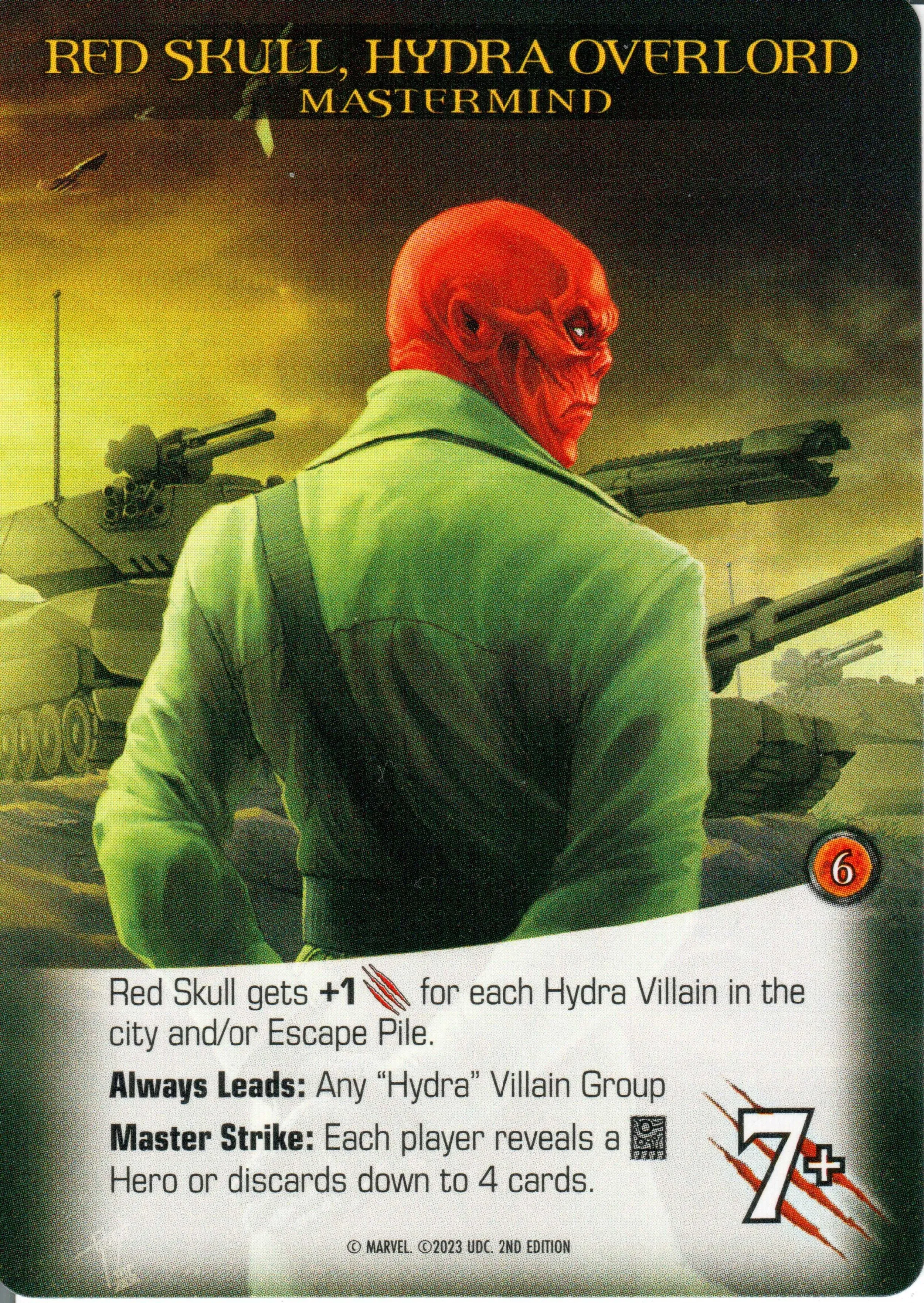
A single win proves you had a good night. A gauntlet proves you understood the set.
The Red Skull gauntlet asks you to beat one mastermind under every scheme in the Core Set (2nd Edition) — nine of them — and it ranks you on the total of your best run against each. There is no submission step. Finish a qualifying match and the publisher picks it up on the next cycle.
The board
The block below is generated from the live gauntlet catalog. If a set changes, it changes here too.
| Mastermind | Red Skull |
| Set | Core Set (2nd Edition) — co2e |
| Legs | 9 schemes |
| Board | gauntlet-co2e-red-skull (solo), …-p2 … …-p5 |
| Divisions | Open, Fixed-Pool |
The nine legs:
1. Bank Robbery Hostage Crisis
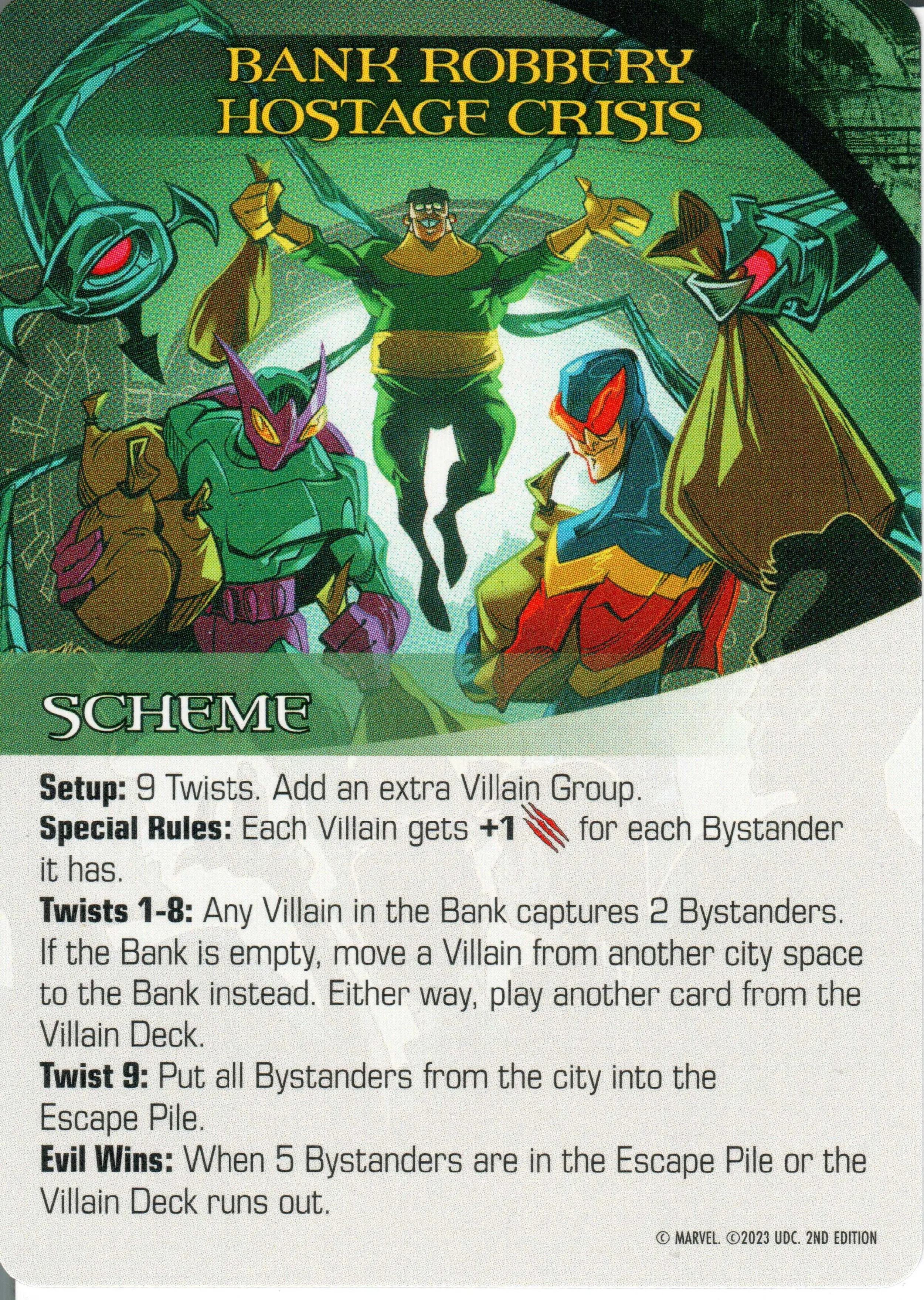
2. Secret Invasion of the Skrull Shapeshifters
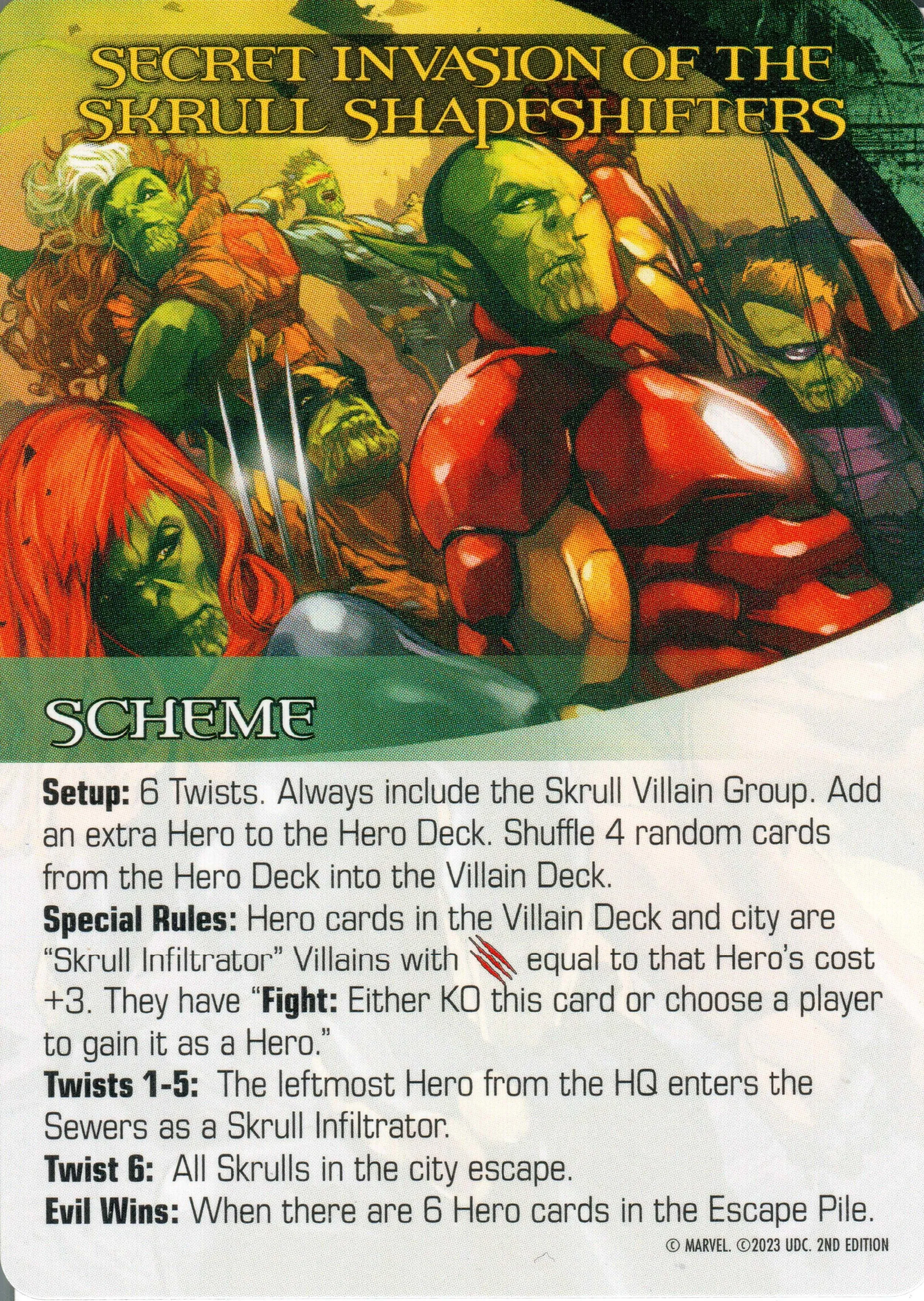
3. The Legacy Virus
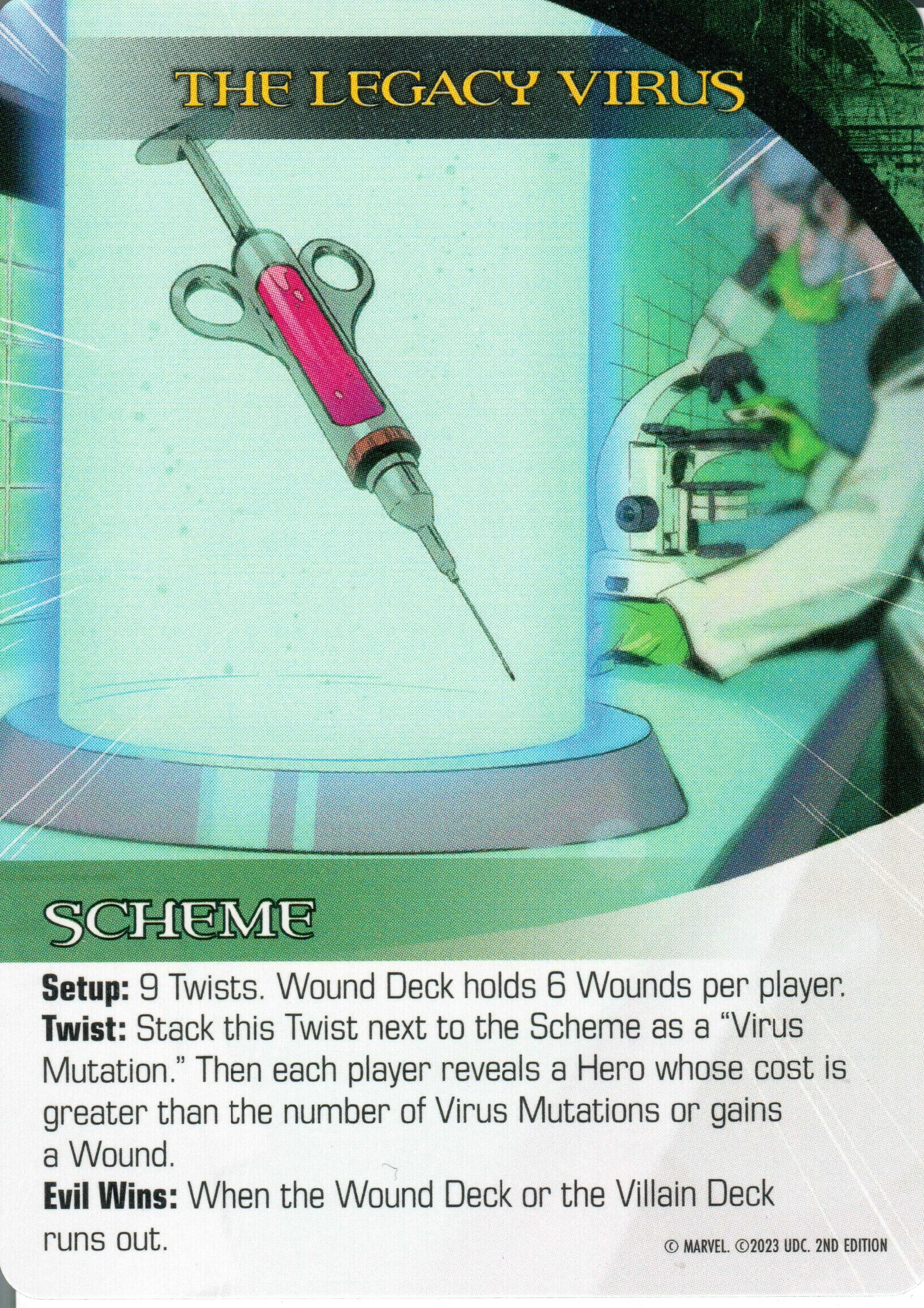
4. Negative Zone Prison Breakout
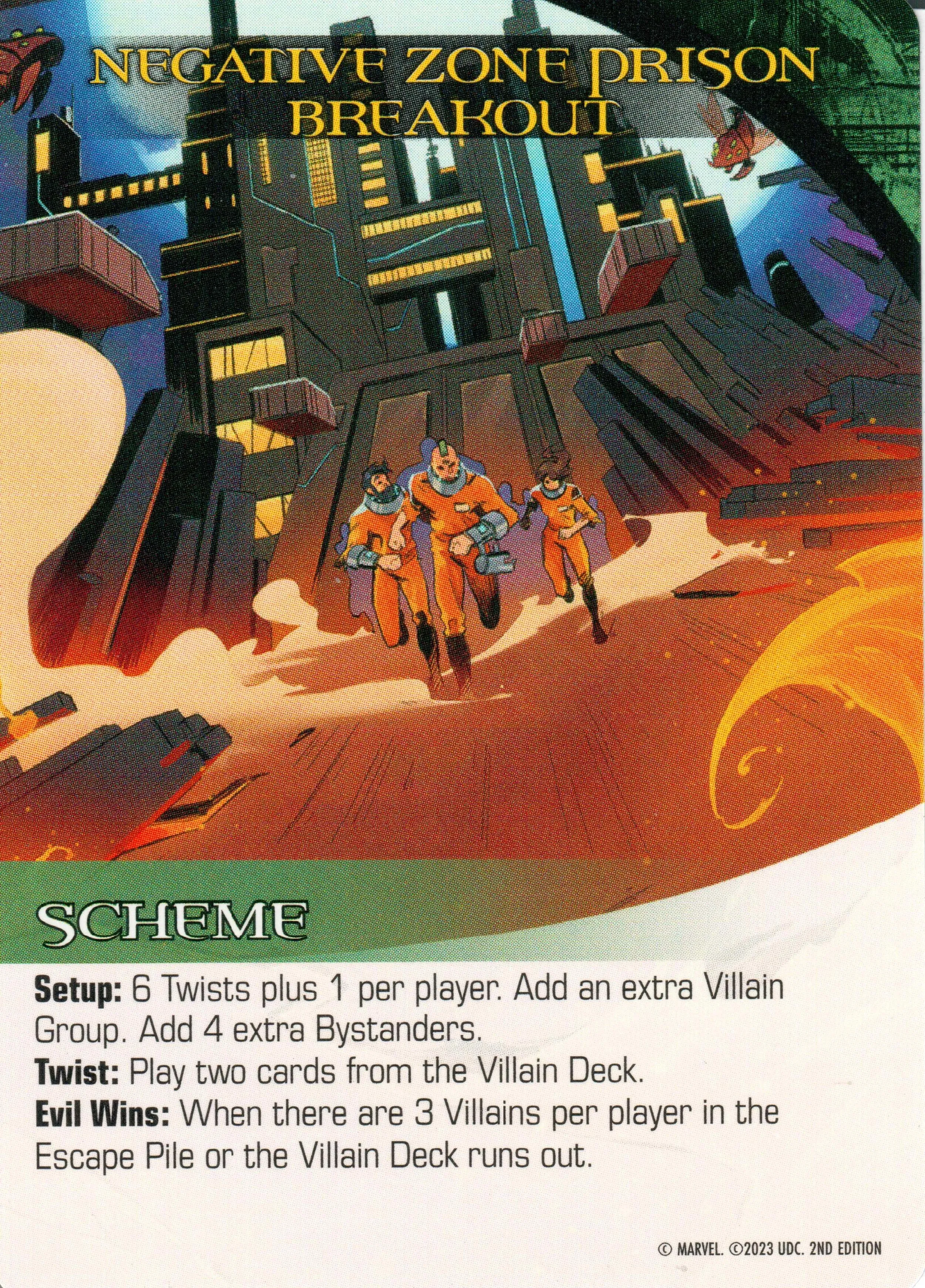
5. Portals to the Dark Dimension
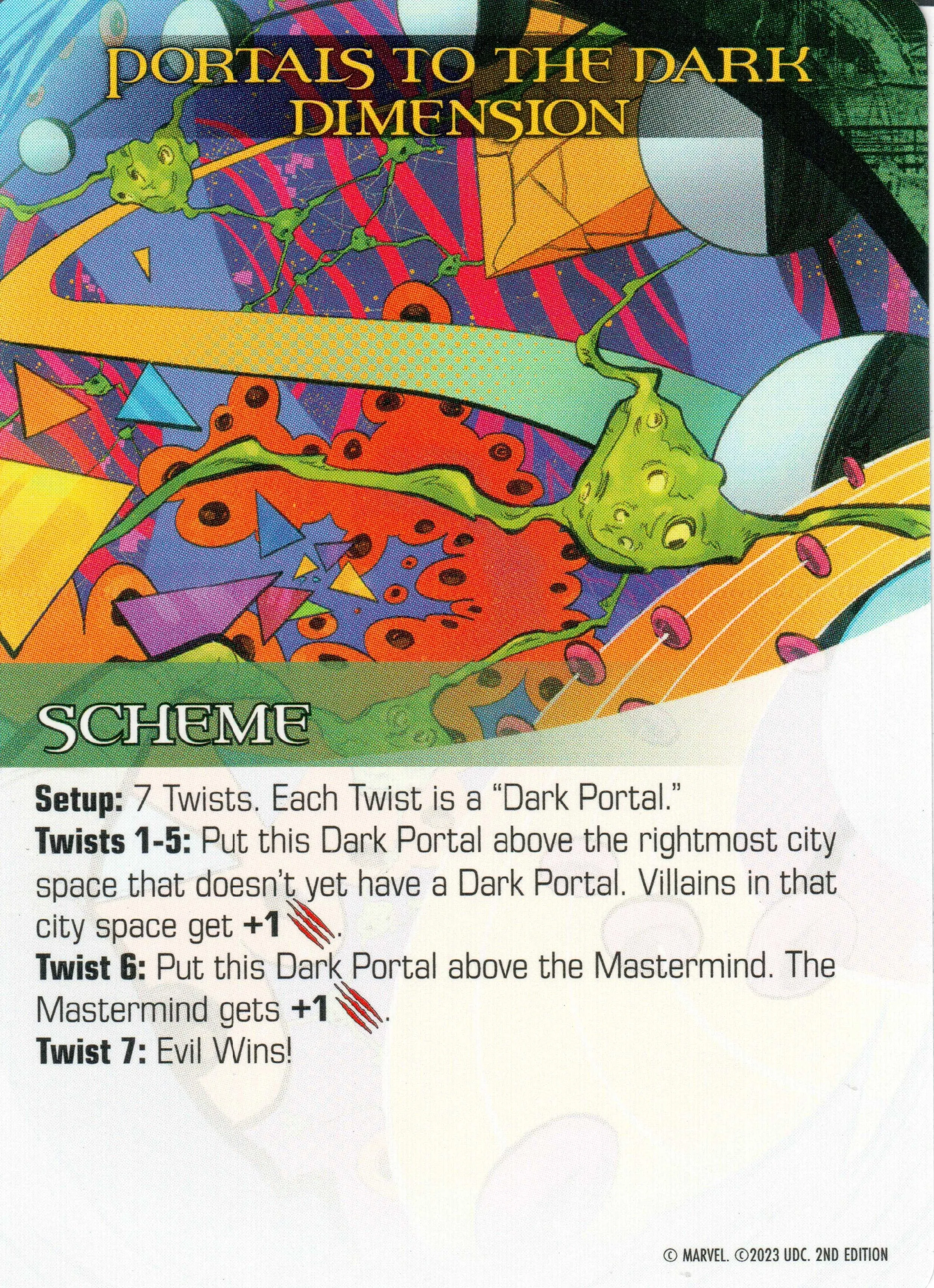
6. Replace Earth’s Leaders with Killbots
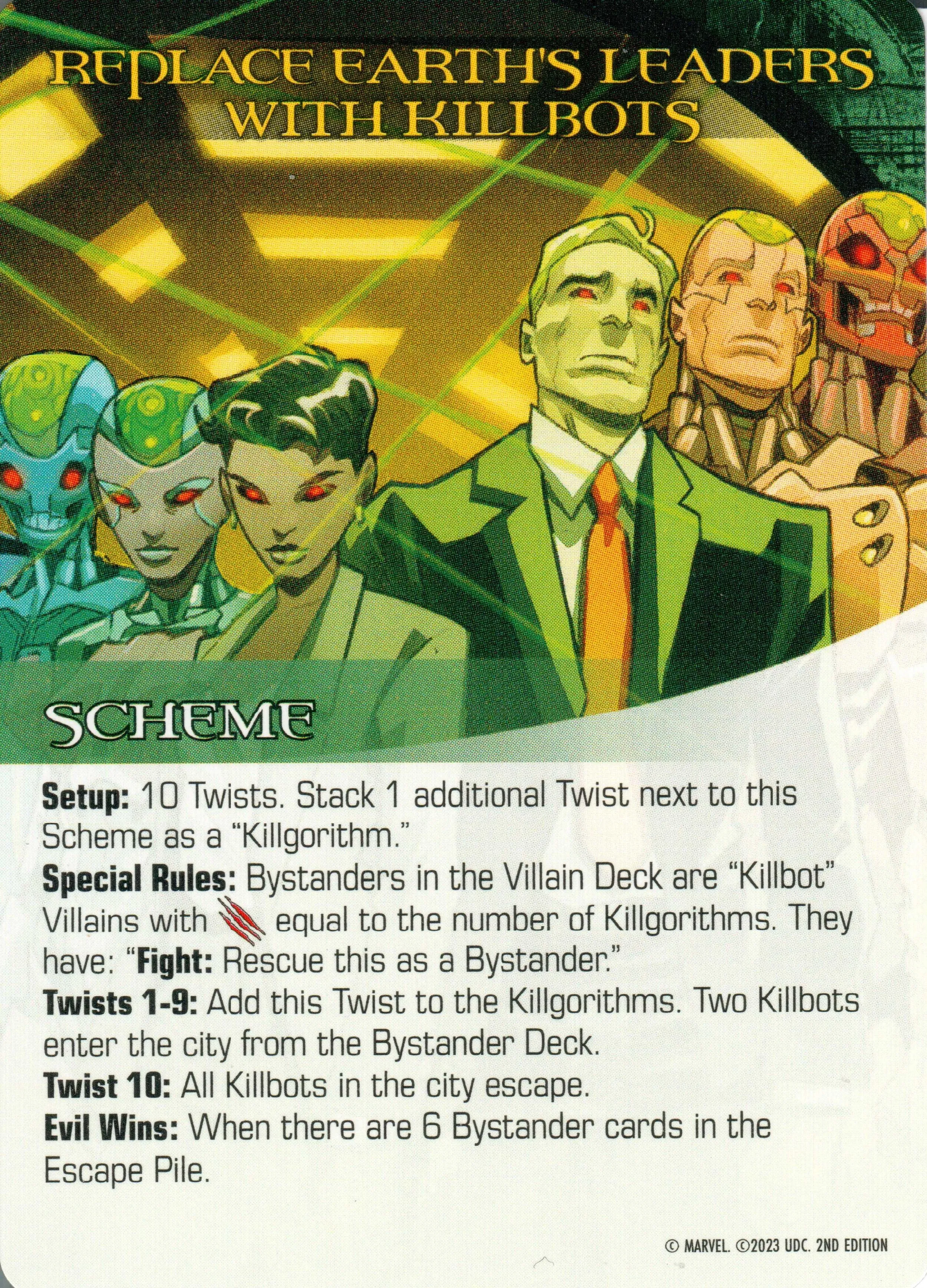
7. Super Hero Civil War
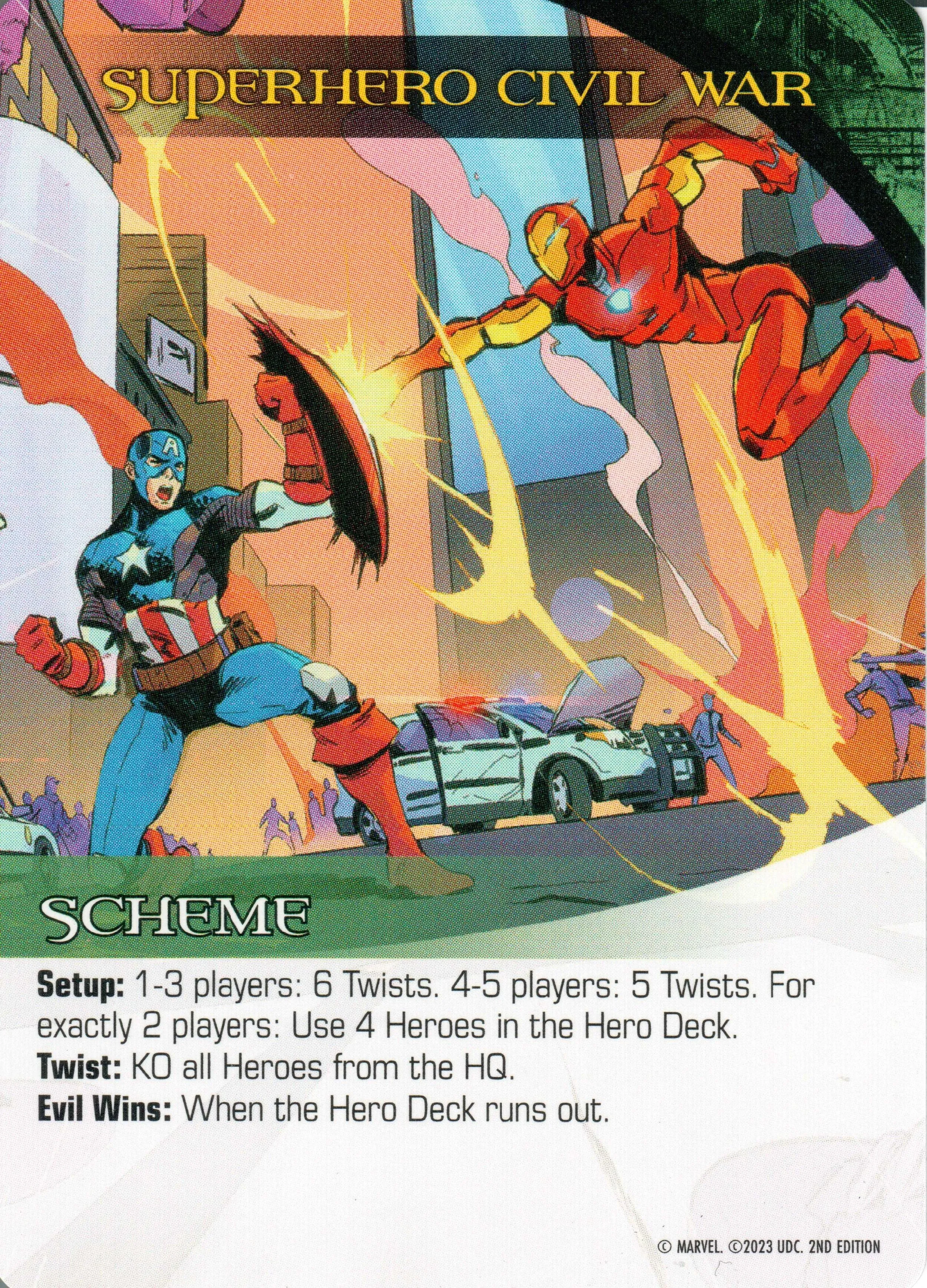
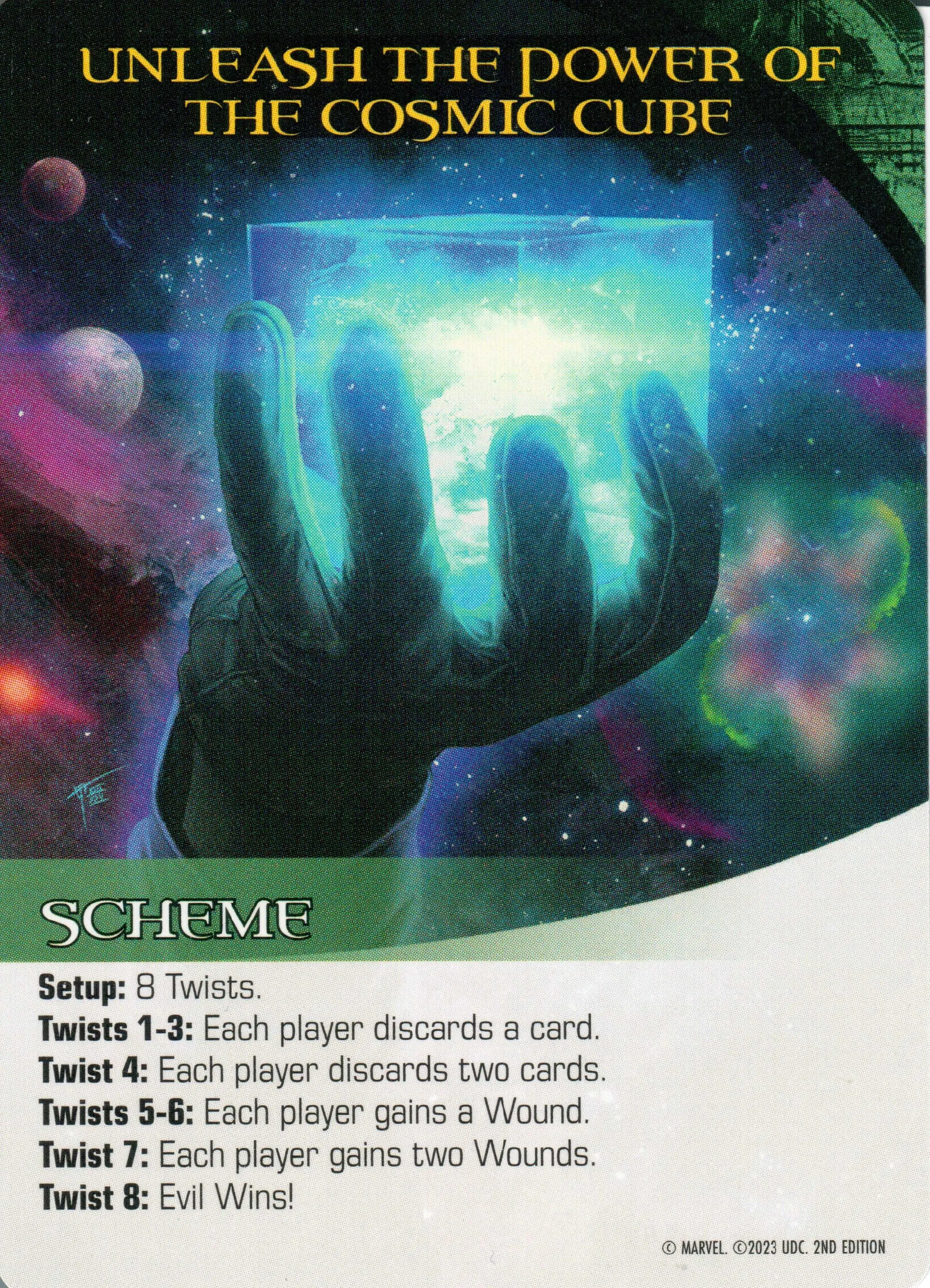
8. Unleash the Power of the Cosmic Cube
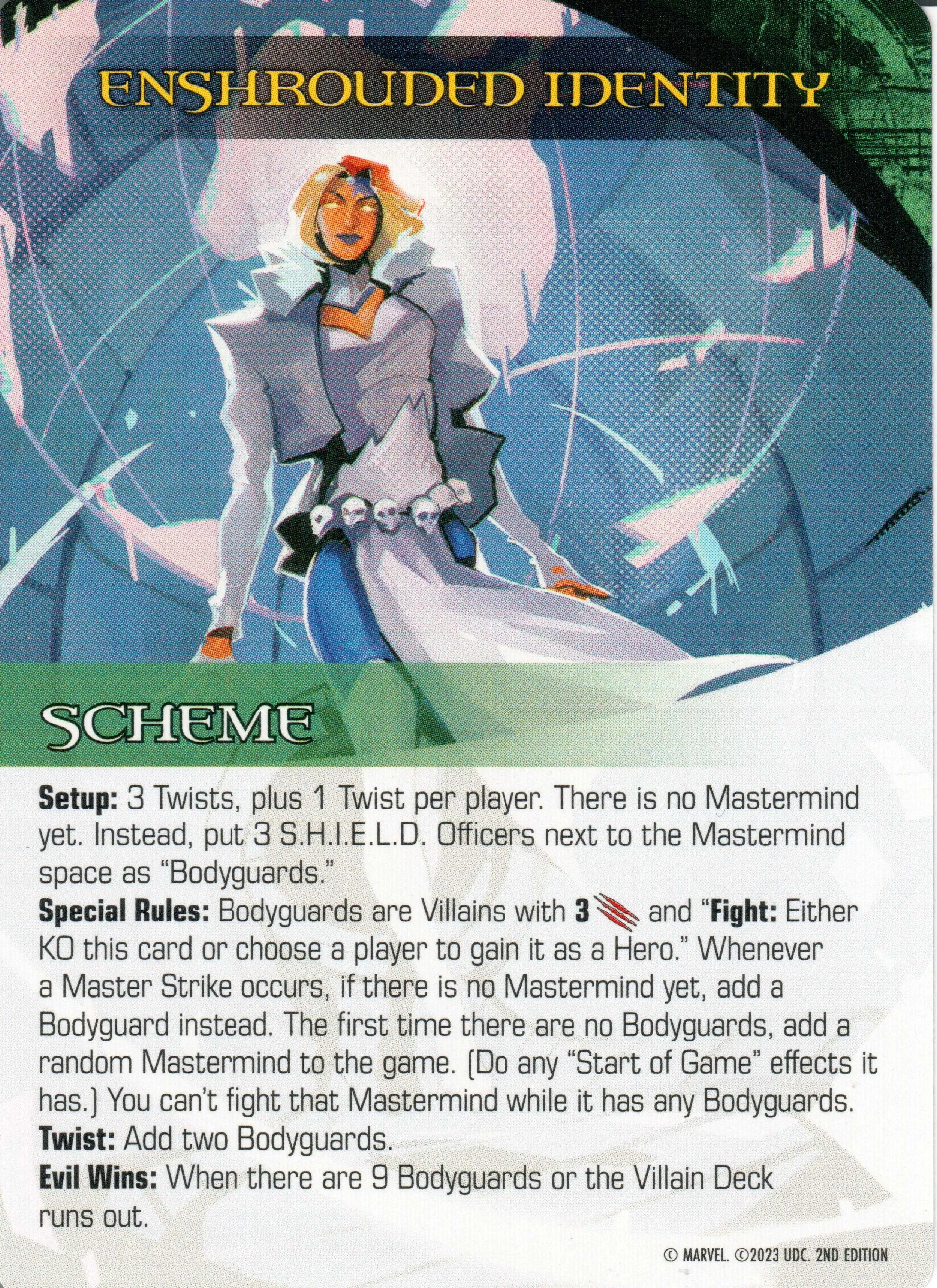
9. Enshrouded Identity
Setup scales with player count, and scores never compare across counts — a solo run and a four-player run sit on different boards:
| Players | Villain groups | Henchmen groups | Bystanders in villain deck | Heroes |
|---|---|---|---|---|
| 1 | 1 | 1 | 1 | 3 |
| 2 | 2 | 1 | 2 | 5 |
| 3 | 3 | 1 | 8 | 5 |
| 4 | 3 | 2 | 8 | 5 |
| 5 | 4 | 2 | 12 | 6 |
One thing worth being clear about, because it is the most common misreading of the format: the gauntlet does not pin your villain groups or henchmen. Any villain groups qualify. The gauntlet fixes the mastermind and the nine schemes; everything else is yours to choose, every single run. That freedom is most of the strategy.
What Red Skull actually does to you
Red Skull’s Master Strike hits every player, not just the active one. That single line is what makes this gauntlet a different problem from a one-off win. In a normal match you can absorb a bad Strike and recover over the next few turns. Across nine legs, a mastermind that taxes the whole table punishes any build that depends on a fragile assembled position — because the Strike does not care whose turn it is.
The practical consequence: consistency beats ceiling here. A deck that produces a reliable middling turn every turn will out-score a deck that produces one enormous turn and three dead ones, because the Strike keeps arriving on a schedule you do not control.
The Fixed-Pool division changes the question
Every board carries two divisions. The Open division is the normal one: pick whatever heroes you want, leg by leg. The Fixed-Pool Championship is the prestige version, and it is a genuinely different puzzle.
Fixed-Pool does not hand you a required roster. It gives you a budget: across all nine legs, the union of every hero you used has to fit inside heroCount + 2.
| Players | Heroes per match | Fixed-Pool budget |
|---|---|---|
| 1 | 3 | 5 |
| 2–4 | 5 | 7 |
| 5 | 6 | 8 |
So at solo you get three heroes per match and five total across all nine schemes — meaning at most two substitutions across the entire gauntlet. At two-to-four players it is five per match out of seven total.
That reframes hero selection completely. In Open, you counter-pick each scheme. In Fixed-Pool you are choosing a core that never leaves plus a small flex slot, and the winning question stops being “what is best against Legacy Virus” and becomes “what is acceptable against all nine.” Specialists get expensive fast. Generalists that are never the best answer but are never a dead card either tend to survive the budget.
And because heroes are not restricted to the set (see below), that budget is spent against your entire collection, not a fifteen-card shelf. Five slots chosen from everything you own is a much harder question than five chosen from fifteen.
Where to start
One rule people assume and shouldn’t: your heroes are not restricted to this set. The gauntlet pins the mastermind and its nine schemes — that’s the whole constraint. Heroes may come from anywhere in your collection, on every leg.
The set’s own fifteen are the thematic default and a perfectly good starting point: Black Widow, Captain America, Cyclops, Emma Frost, Gambit, Hawkeye, Hulk, Iron Man, Nick Fury, Rogue, Spider-Man, Spider-Man (Miles Morales), Storm, Thor, and Wolverine. But treat that as a shelf, not a fence.
Some honest guidance on how to use it:
- Open division — run the schemes in the order above. Bank Robbery Hostage Crisis is the gentlest introduction to Red Skull’s Strike cadence and the cheapest place to learn it. Save Super Hero Civil War and Unleash the Power of the Cosmic Cube until you know how your build handles pressure, because they punish a stalled engine hardest.
- Fixed-Pool — pick your core from reliability, not power. Heroes whose value does not depend on a specific villain type or a fully assembled board are worth more here than they look in isolation. Your two flex slots should cover your core’s single worst matchup, not chase upside.
- Play the same roster twice before committing. Since scores are best-per-leg, a second attempt at a leg only helps you. There is no penalty for a bad run.
What this section will say later
I want to be straight about the limits of the advice above: the boards are new and largely unclaimed, so these are informed opinions, not measured results. Nobody has enough Red Skull gauntlet data yet to say which heroes actually win it.
That will change. Every score on these boards is replay-verified, which means once entries accumulate we can publish what genuinely wins this gauntlet — real hero frequencies among ranked entries, real Fixed-Pool compositions, per-leg score distributions. This section will be replaced with that data rather than more opinion.
Until then, the fastest way to find out what works is to go play it.
One honest caveat before you start. The gauntlet boards are not accepting entries yet. Competitive scoring is gated on PAR calibration — the per-scenario baseline every score is measured against — and PAR is deliberately unpublished until the engine implements each scenario’s card abilities faithfully. Publishing baselines against a partly-implemented engine would bake wrong numbers into permanently version-pinned scores, so the gate stays closed on purpose.
Practically: you can play these matches today, but a finished run will not yet post to the board. When calibration publishes, the boards open. Nothing here is wasted — the strategy holds either way, and the format is worth learning before the field arrives.